
Marin County Resident Lookup Basics
The resident lookup should follow the question. The Marin County Assessor-Recorder-County Clerk combines several offices administratively, but an assessor roll, a recorded deed, a court case, and a birth certificate answer different questions. The table separates the evidence before a name search begins. A mailing address is only a lead, a recorded owner is not automatically an occupant, and a directory resident is not the same role as a voter, agent, or case party.
| Record | What It Confirms | Where to Search | Access |
|---|---|---|---|
| Assessor or tax roll | Parcel, assessed owner, situs, and mailing address as a lead | Marin Assessor Records and Maps | APN or map-book search; broader fields may need a request |
| Recorder index | Grantor, grantee, document date, document number, and recorded property link | Marin Official Records Search | Online from January 2, 1973; older material in Room 232 |
| Voter status or data | Personal registration status and political geography | California My Voter Status | Self-lookup; fuller extracts require an approved purpose |
| Superior Court | Party or AKA, case number and type, status, filings, events, and disposition | Marin Superior Court ePortal | Account/login, daily limit, case-type and document restrictions |
| Vital records | Birth, death, public marriage, and relationship evidence | Marin Recorder or California CDPH | Authorized or informational copy rules apply |
| Business or FBN filing | Entity, agent, registrant, status, and dated business address | California bizfile and Marin FBN | Public index; a business address is not a home |
| Professional license | Licensee, number, status, dates, discipline, and address of record when shown | California DCA License Search | Free public search; address role needs care |
| Probate, directories, yearbooks, obituaries | Historical identity, relationships, school or address clues | Marin libraries, court, archives, and newspapers | Coverage and copy access vary by collection |
Use the assessor or recorder when a parcel or deed clue exists. Use court records when a case number, party name, or filing event is the question. Use vital records for identity and relationship evidence, subject to eligibility. Use business and license systems when a person is tied to a named entity or credential. The search becomes more reliable when no single row carries the whole conclusion.
Marin County Resident Identity Anchors
A name alone is a weak key in a Marin County resident lookup. Start with two independent anchors, such as an age or date, middle name, old address, relative, occupation, school, or entity. Search spelling variants, married or maiden names, hyphenation, initials, and likely OCR errors. Keep a note of where each clue came from and do not merge two records just because the first and last names match.
The roles must stay separate. An owner holds title, a taxpayer receives an assessment notice, a voter has a registration record, an agent represents a business, and a directory resident was printed by a publisher. A court party is connected to a case, not automatically to a current address. The Marin assessor's mailing address can belong to an owner elsewhere, while a recorded deed establishes a title event rather than daily occupancy. Treat each result as a dated statement with a named custodian.
For an old address, begin with MarinMap or a parcel record, carry the APN into the assessor system, and then use the owner name in the recorder index. For a family clue, pair a vital or obituary detail with a directory, census, or probate file. For a business clue, compare the Secretary of State filing with the Marin fictitious-business-name record and a governing license board. A two-anchor method reduces namesake errors without exposing records that California keeps confidential.
Marin County Court Records for One Resident
When a resident lookup reaches the court, Marin Superior Court's ePortal requires account registration and login. It covers criminal, civil, traffic, and family-law matters, but access differs by case type and document. General public users may view up to 45 cases per day. New filings can lag, and post-June 20, 2023 criminal matters are in the current ePortal while earlier criminal matters remain associated with EJUS. Sealed, confidential, juvenile, adoption, parentage, and other protected material is excluded from ordinary public access.
A court name search can return a case number and title before a file request is made. Depending on access level, the index may show party names and AKAs, case category, filing date, register-of-actions events, hearings or calendars, status, disposition, and eligible documents. The court warns that a current filing may not appear yet, so verify an important result against the file or clerk record. California has no statewide trial-court party-name index; the filing county matters.
| Case number and title | Identifies the court file and helps staff locate the right matter. |
|---|---|
| Party or AKA | Shows the name used in the case, including an alias when the index provides one. |
| Case type and filing date | Places the matter in a civil, traffic, family, criminal, probate, or other category. |
| Register of actions | Lists dated filings, hearings, events, and later status or disposition entries. |
| Document access | Shows only documents eligible for the access level; courthouse terminals can display more than remote access. |
Room 113 at the Marin courthouse is the physical fallback. A person can request records at the counter or by mail to P.O. Box 4988, San Rafael, CA 94913, using the court's records request process. A search longer than ten minutes or an estate search is $15. Copies are $0.50 per page, comparison is $1 per page, certification is $40 per document, and court-ordered authentication is $15 per signature. A certified dissolution record is $15, with the court's listed public-agency rate lower. Use ePortal to identify the case number and document title before ordering pages.
Note: The free case index and a paid certified copy are different products, so preserve the case number before requesting a document.
Verifying a Marin County Resident Record Chain
For a Marin County resident lookup, a sound one-person check moves from a broad clue to a narrow record. The verification sequence uses an address and a name because the assessor, recorder, and court systems do not share one search box. It also makes room for an in-person or mail fallback when a remote result is incomplete.
- Match the name to two anchors, such as an old address and a middle name, before opening unrelated records.
- Use MarinMap or another parcel source to identify the APN, then check the assessor's owner and mailing information without calling it proof of residence.
- Search the recorder by grantor or grantee name, spelling variants, document date, or document number. The recorder does not search by street address or APN.
- Read the deed or order a copy when the indexed parties and dates point to the right instrument. Earlier records than January 2, 1973 require the Room 232 path.
- Use a court, vital, directory, obituary, or business record to test the identity again, and keep the role and date for each result.
- Docket
- The court's organized record of a case, including filings, events, hearings, and orders.
- Index versus image
- An index is a finding aid with labels and dates; an image or certified copy is the underlying record supplied by its custodian.
- Certified copy
- A custodian-issued copy with a certification that gives it a formal status beyond an ordinary screen view.
- Grantor and grantee
- The grantor transfers an interest and the grantee receives it in a recorded instrument; those roles trace title, not every resident.
The county recorder's index is described as a guide or card catalog, not the instrument itself. Search every reasonable spelling, then order the document when the distinction matters. The recorder's copy-order form accepts official-record and map requests, requires requester and mailing details, and states that certified copies cannot be emailed. A result is strongest when its reference number, document type, recording date, and legal description agree.
Marin County Vital Records for Resident Identity
A lookup for a Marin County resident that depends on vital records needs the right event custodian. Marin Recorder issues births and deaths occurring in Marin from the 1850s to the present, plus public marriages whose licenses were registered in Marin. The newest six weeks of births and deaths may be held only by Marin Vital Statistics. The Recorder's vital desk is at 3501 Civic Center Drive, Suite 232, San Rafael, with phone service at 415-473-6092 on weekdays from 9 to 4. A record from another county, a sealed post-adoption birth, or a divorce decree belongs to a different custodian.
For 2026, a birth certificate is $31, a death certificate is $26, and a public or confidential marriage copy is $19. CDPH divorce certificates are $18, while Marin court certified dissolution records are $15. An authorized copy establishes identity for eligible requesters. An informational copy is marked “Informational, Not a Valid Document to Establish Identity.” Confidential marriage records generally go to a spouse or a court-order recipient. Authorized mail requests require the signed, notarized sworn statement required by the form.
Birth, death, and marriage forms ask for full names, event date and place, parent or spouse details, the copy type, the applicant's relationship, contact information, signature, and eligibility. Failed searches can produce a Certificate of No Public Record and retain the fee. Use California CDPH Vital Records guidance to distinguish an informational copy, an authorized copy, and a state-level record before paying for the wrong product.
Marin County Business and License Records
In a Marin County resident lookup, a business filing or professional license can resolve a name, but it answers a role question rather than a residence question. The California Secretary of State's bizfile search shows entities, agents, filings, address, status, and related dates. Advanced search can refine entity type, status, and initial filing date. Marin's fictitious-business-name record adds county registrant and filing details. The business or agent address is an address of record for an entity and should not be recast as a home.
The California bizfile business search is the right source for the entity side of that trail. It can connect a person to a company name, filing, agent role, or dated address, then point to the next custodian. Filing documents can contain more detail than the search result, but an index result is not a certified copy.
The business-search image reinforces the need to label a person as an officer, agent, registrant, or other filing role rather than assuming the filing describes a private residence.
The Department of Consumer Affairs license search can return a licensee, license number, status, issue and expiration dates, discipline, and address of record where public. Search by board or license type, name, number, or location. The California DCA license lookup is useful for a credential trail, not a household roster.
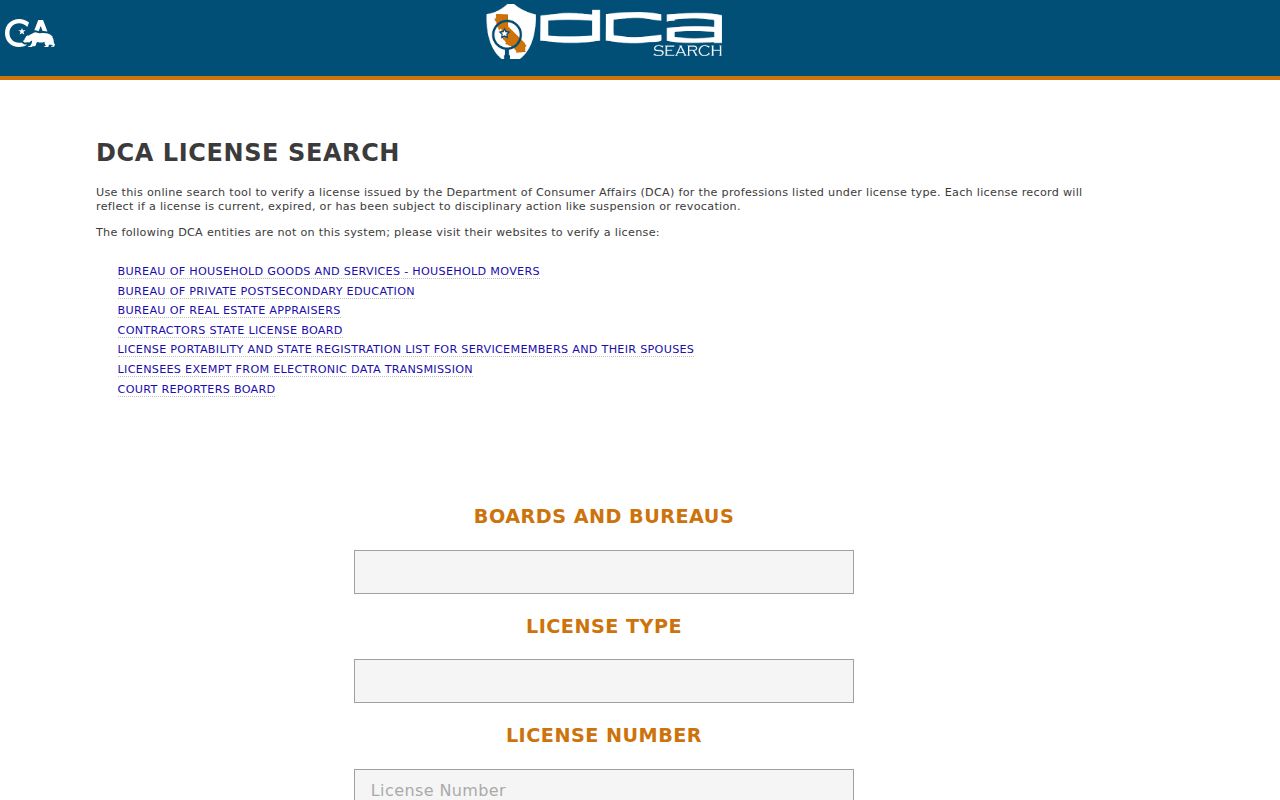
License results can confirm a professional record while leaving the address role and current personal circumstances unresolved.
Marin County Heir and Family Records
A family-history resident lookup needs a different sequence from a present-day name search. For an heir, identify the decedent, locate public probate filings, inspect petitions and notices, and compare the names with an obituary and recorded deed. Probate may identify a representative or interested party, but sealed or restricted material remains outside public access. A death record can establish a relationship clue without proving that every person with the same surname is related.
For an adoptee or birth-parent search, use California CDSS statutory and mutual-consent channels rather than trying to bypass sealed records. For a classmate or former neighbor, yearbooks, local directories, obituaries, and respectful alumni or community channels can fill a gap. The Anne T. Kent California Room and Marin History Museum hold local directories, yearbooks, newspapers, oral histories, and biographical files. Historical volumes are described more fully on the Marin County city directories page, where the year and publisher determine the right shelf.
Novato's oral histories from the 1920s through 2024, organization minutes, ranch material, and the Novato Advance database from 1922 through 2012 can connect a family name to a place or group when no residential directory survives. Mill Valley's Lucretia Little History Room and its nearly 200 oral histories offer another local route. These collections are context, not a license to publish private membership or household details.
Legal Limits on Marin County Resident Searches
California controls access to several identity records. A lawful resident lookup must respect those boundaries. My Voter Status is an identity-matched personal lookup, not a reverse directory. Full voter extracts require an approved election, political, scholarly, journalistic, or governmental purpose, an original signature and identification copy, and no more than ten specific voters per application. Review can take up to ten business days. Approved files are delivered through secure sharing as tab-delimited text or PDF, and protected voters are withheld.
The CCPA and CPRA, Civil Code sections 1798.100 and following, give qualifying rights to know, access, delete subject to exceptions, correct, opt out of sale or sharing, and limit certain sensitive-information uses. California's DROP broker-deletion system begins processing broker deletion requests August 1, 2026. Safe at Home, under Government Code sections 6205-6216, supplies a substitute address for enrolled protected participants. It does not erase every lawful record or make a public record retroactively disappear.
California's public registry systems also have narrow rules. The official California Megan's Law site presents statutory public information with exclusions and use warnings, not a general resident directory. The California Megan's Law search illustrates a regulated public registry with its own display limits.
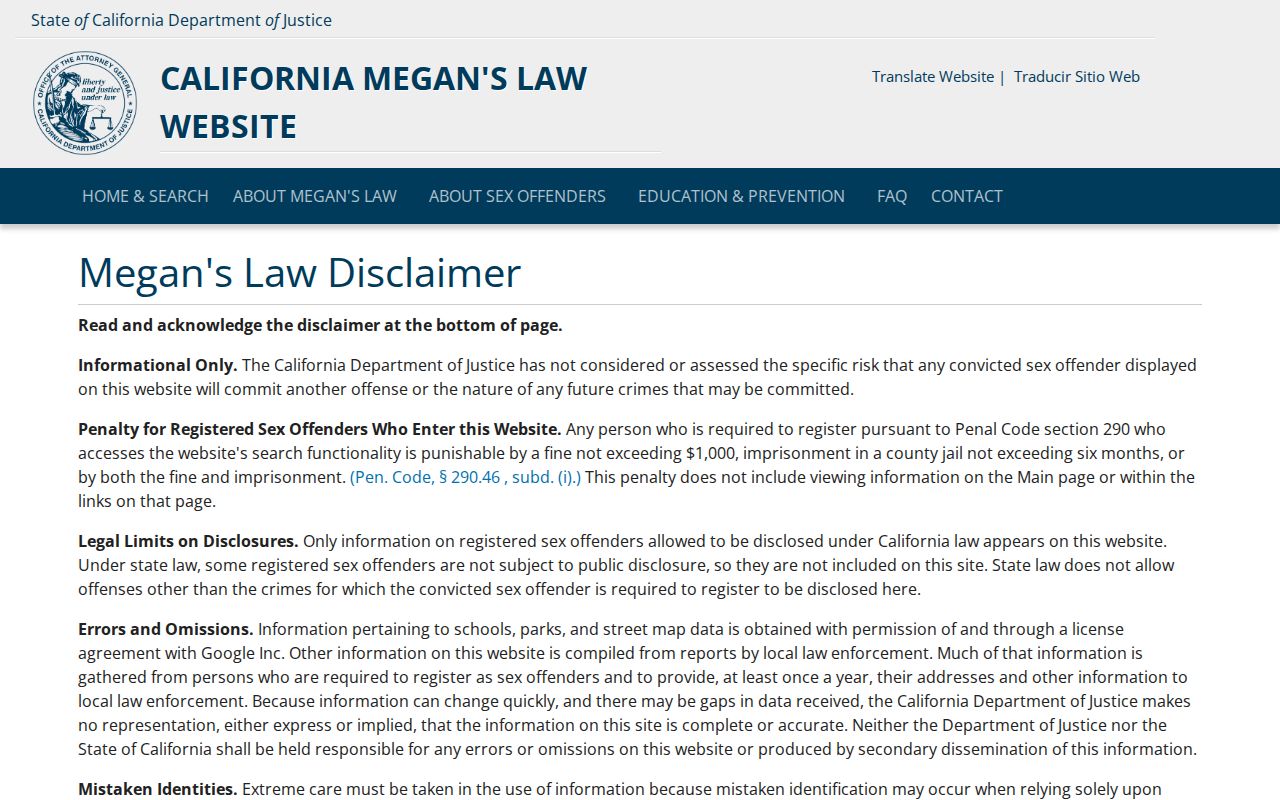
The registry image is a reminder to read the custodian's notice and use category before treating a public result as an identity match.
Lawful personal use. Use a Marin County records search for a lawful personal purpose, family history, estate work, civic research, or safety concern. Do not use a record to stalk, harass, intimidate, or harm anyone, and do not try to defeat a confidentiality rule.
Correcting a Marin County Resident Record
When a resident lookup returns a mistaken result, take it to the office that created or indexed it. Preserve the URL, case number, document reference, page, filing date, or search terms that produced the error. Ask the court clerk about a court index, the Recorder about an official-record index, the assessor about a parcel roll, the vital desk about a certificate, and the Secretary of State or license board about a filing or credential.
When a county administrative record has no specialized route, the California Public Records Act, Government Code sections 7920.000 and following, is the fallback. Marin's NextRequest process accepts anonymous requests; an agency ordinarily makes a determination within ten days and may use a written fourteen-day extension for unusual circumstances. A request should identify the record, date range, department, and format sought. It is not a substitute for an authorized vital copy or a certified court document.
The final check is restraint. Keep the record label, source, date, and role together. A current result can lag, a historical entry can omit a household member, and a public address can belong to an entity, agent, owner, or protected substitute-address program. That discipline makes the result more accurate and more respectful of the person behind the name.