
Marin County Previous Resident Sources
A useful house-history file starts with current evidence and then moves backward through sources that answer different questions. The table separates ownership, occupancy, construction, and family-history evidence so a past name does not gain a stronger meaning than its record allows.
| Source | Years It Covers | Where Held | What It Shows |
|---|---|---|---|
| Assessor roll and parcel maps | Current roll; map history varies | Marin Assessor web application and counter | APN, situs, mail-to, values, use, units, and parcel-map links |
| Recorder official records | Online access described from Jan. 2, 1973; older access needs confirmation | Recorder index and Room 232 | Grantors, grantees, deeds, maps, dates, references, and legal descriptions |
| Directories and reverse directories | Directory holdings begin in 1878; exact reverse years need confirmation | California Room and Marin History Museum | Address-to-occupant or name-to-address clues between census years |
| Federal census | Public through 1950 under the 72-year rule as of 2026 | NARA, library databases, and FamilySearch | Household members, relationships, age, and address or locality context |
| Permits and planning files | Dates vary by county department or municipality | Marin County CDA or city/town custodian | Construction dates, applicants, owners, contractors, decisions, and reports |
| Newspapers, obituaries, and probate | Marin runs and indexes vary by title and year | Libraries, court files, and newspaper databases | Deaths, heirs, transfers, relationships, notices, and address references |
| Historic and Sanborn maps | Item years require confirmation | California Room and Library of Congress | Building footprint, use, named places, and address continuity |
Street address is the weak link. It can be renumbered, renamed, abbreviated, or indexed under a nearby town. The APN, recorded map, and legal description are better bridges. Previous residents can then be tested against a directory or census entry rather than guessed from a current mailing address.
Start with a Marin County Address
Begin with the current parcel, not with a presumed former name. Search the address in MarinMap, click the parcel, and record the APN and jurisdiction. Then use the Marin County Assessor Records and Maps application. Its public roll lookup requires a parcel number, while its map mode uses map book and map page. It does not offer a public owner-name or old-street-address search.
Write down the current owner or mail-to name, the situs address, the legal description if available, the roll year, and the parcel-map reference. A mailing address may be outside the parcel and is only a lead. The roll can show values, exemptions, use, units, and other assessment fields, but property characteristics are maintained for assessment and are not continuously updated. For previous residents research, the current APN is the launch point for the Recorder name search, not proof of every person who lived there.
Walk Back Through Marin County Records
Use the current roll owner as a grantee search term. Find the acquisition deed, read the seller, buyer, recording date, reference, and legal description, then search the seller as grantee in an earlier period. Repeat the pattern while matching the legal description and spelling variants. Grantor means the party transferring an interest. Grantee means the party receiving it. A chain of title is the linked sequence of those transfers for the same land.
- Pull the current APN, owner or mail-to lead, situs, and legal description from the assessor and map viewer.
- Search the current owner as grantee in the Recorder index, using date, reference, book/page, map, and title filters when useful.
- Identify the acquisition deed and order the instrument through the Recorder document and map order form when the legal description or vesting needs confirmation.
- Take the seller named in that deed and search backward as grantee. Try initials, spelling variants, married names, and punctuation changes.
- Repeat until the online index ends, then ask the Recorder about pre-index books or microfilm in Room 232.
Keep the source date beside every name. An owner in a deed is not automatically a prior household member, and a deed may record a trust, estate, or other legal holder. The previous residents trail needs the deed chain as its backbone, while directories, census records, and notices supply the people layer.
The official order page makes the transition from index result to record copy visible.
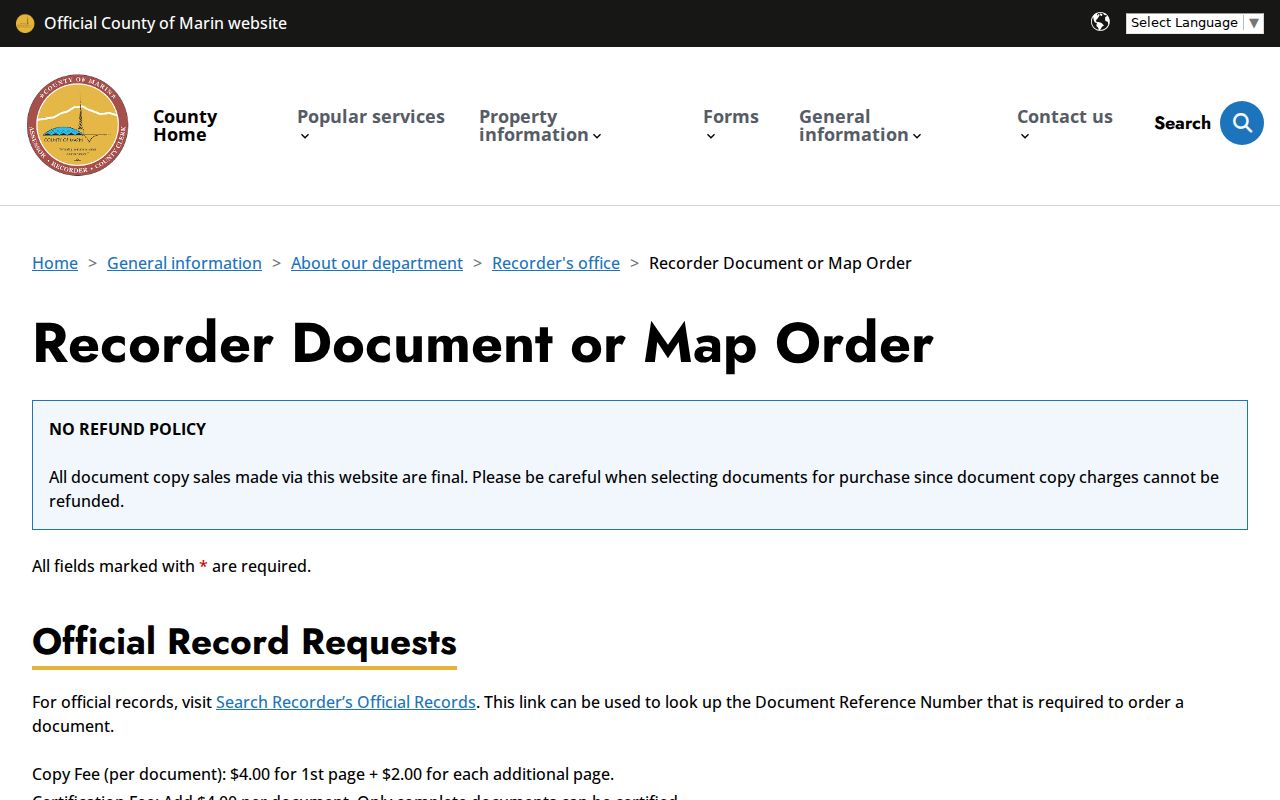
A copy request is useful when an index line does not show the legal description or the actual party roles needed to keep the chain intact.
Marin County Address Records
Subdivision, parcel combination, and survey changes can create a new APN for land that still belongs to the same historic tract. A prior parcel number may therefore disappear from a current search even though the land trail continues. Recorded subdivision, parcel, and survey maps are the bridge. Match lot or parcel references, map book and page, adjoining land, and the legal description before declaring a gap.
- APN
- An assessor parcel number used to locate property in the assessment system. It is not a postal address and not, by itself, a legal description.
- Chain of title
- A documented sequence of ownership transfers for a parcel or tract, tested through recorded instruments and land descriptions.
- Legal description
- The recorded description that identifies the land through a subdivision, map, lot and block, or metes-and-bounds reference.
- Historic address
- A street label or number used in an earlier period. It must be reconciled with maps and locality names before it is compared with a modern address.
Marin County's parcel maps are assessment tools, and MarinMap is informational rather than survey accurate. The Recorder's recorded maps and instruments carry the stronger historical link. When the map evidence is unclear, ask the Recorder at 415-473-6092 what older map or book series can be consulted.
Marin County 1973 Index Records
The Recorder access map describes online material from January 2, 1973, but that date should be used cautiously. It is a practical digital boundary, not proof that every earlier or later instrument is absent. The web index can miss a spelling variant, a document indexed under a different party, a map reference, or a record that needs staff assistance.
For a date before the online range, call the Recorder at 415-473-6092 and ask about pre-index grantor-grantee books, direct or reverse indexes, and microfilm in Room 232 at the Marin Civic Center. The free index and paid copy process are separate. Official copies are ordered through the county form, and certified copies cannot be emailed. The earlier the address history, the more important it becomes to compare the deed, map, directory, census, and newspaper evidence instead of relying on one search screen.
Note: Marin was established on September 16, 1850, but county creation does not prove that every 1850-era land record is online or held in one searchable series.
Marin County Past Household Records
Ownership and occupancy part ways in the historical record. Marin directories and phone books run from 1878 to the present in the California Room's broad collection statement. Named runs include the complete 1901 San Rafael directory, Kingsbury's 1905–06 edition, county editions from 1942–43 through 1957–58, Great Registers from 1906–1974, selective Blue Books from 1921–22 and later town sections, and an I.J. biography and obituary index from 1970 to the present. Exact reverse-directory years need confirmation.
Use an address-to-occupant entry as a lead, then compare nearby editions. An ordinary alphabetical directory may place a person at an address, while a reverse directory may place several names at one address. Neither is complete. The federal census is public through 1950 under the 72-year rule as of 2026 and can add relationships, ages, household structure, and tenure context. The historical shelf and its collection details are available through the Marin County City Directories page.
When a person disappears from one edition, check an adjacent-town volume, an obituary, a marriage or death record, a probate file, a newspaper notice, or a map that explains a changed locality. A missing directory line is an omission, not proof that previous residents left on a known date.
The National Archives at San Francisco is one archive route for census and regional federal material.
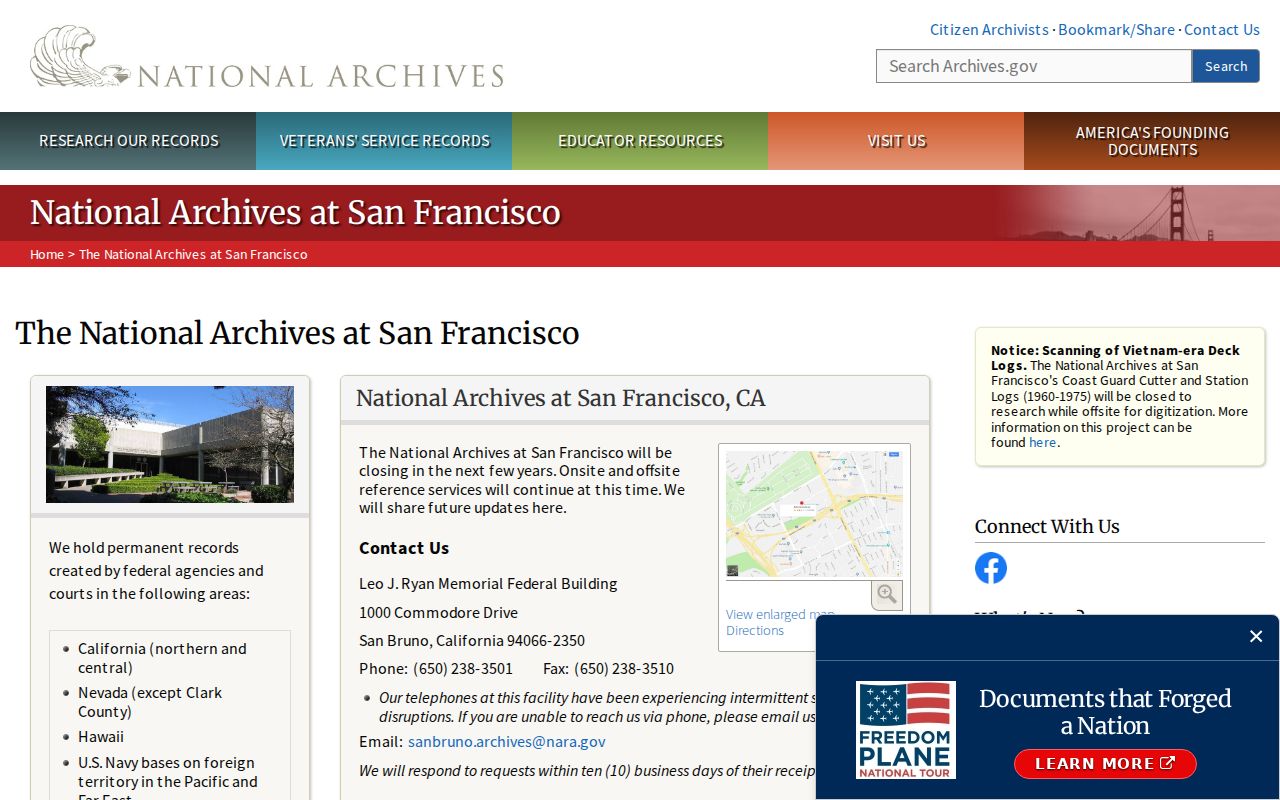
Archive access is most useful when a directory clue is paired with a household name, locality, and approximate year rather than with a street number alone.
Marin County Permit Records
Permits can date an addition, alteration, planning decision, well, septic system, pool review, or other physical change. For unincorporated land, use the Marin County Community Development Agency records search and its Building and Safety, Environmental Health, Planning, and Public Hearings viewers. The CDA counter at 3501 Civic Center Drive, San Rafael, CA 94903, is open Monday through Thursday from 8 a.m. to 4 p.m. and Friday from 8 a.m. to noon; the phone is 415-473-6269. Incorporated parcels belong to the appropriate city or town custodian.
A permit result may name an applicant, owner, or contractor and identify a project address or APN. It dates construction or a public decision, not occupancy. Historic Sanborn maps can add building footprint and use context. The Library of Congress Sanborn Maps collection is a national access point, while the California Room's Historic Home and Building Resources guide can help reconcile old street names, photographs, maps, and local directories.
Marin County Archives and Family Records
Family-history sources can explain why a name appears at an address without turning an address clue into a present-day claim. The Anne T. Kent California Room offers directories, newspapers, maps, oral histories, yearbooks, and a Historic Home guide. The California State Library genealogy resources describe state-level collections and research paths. Use the catalog, remote digital material, or a staff request when an item is not online.
Marin's local history also crosses Coast Miwok, Spanish and Mexican mission or rancho records, and American county records. Portuguese and Azorean dairy families may appear across ranch accounts, Catholic registers, deeds, cemeteries, and newspapers. A locality, named ranch, telephone exchange, or church reference can be the bridge when a formal address is missing.
The California State Library genealogy guidance is a useful archive starting point for Marin County previous residents.
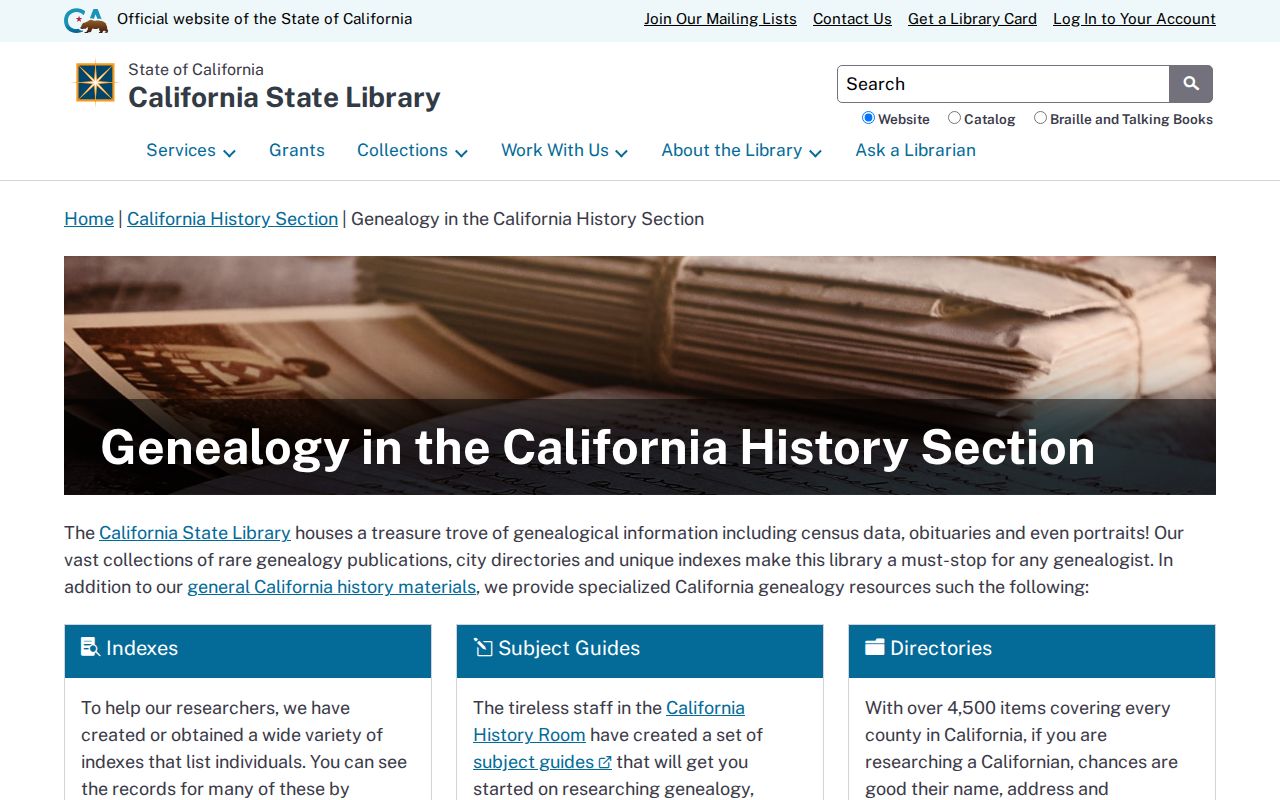
Archive collections work best when each clue is logged with its date, original spelling, locality, and record type before it is compared with the deed chain.
Marin County Obituary and Probate Records
An obituary can name a spouse, child, parent, former locality, or later address that a deed does not show. Marin County library resources include the Marin Journal run from 1861 to 1922, California newspaper links, HeritageHub coverage, and the volunteer I.J. index from 1970 to the present. Search names with relatives and town names, not only with the street number. Newspaper notices can also mark a sale, estate, memorial, or move.
Probate files in Marin Superior Court can add a decedent, representative, heirs, petition, or order when the public file is available. Sealed or protected material is excluded. Use a probate clue to confirm a relationship or date, then return to the deed, map, directory, or census record. This keeps a family-history connection distinct from an assumption that every named relative occupied the property.
A Marin County Records Story
Marin's record history explains why previous residents research often needs both a web search and a library or archive visit. The Assessor-Recorder-County Clerk preservation program identifies 4,650 historic volumes dating to 1856, including maps, deeds, and ownership or encumbrance records. A February 2025 budget report identified 314 volumes preserved, with 190 more scheduled across FY2024–26. The web index is therefore one access layer inside a larger preservation program.
The Marin History Museum history records a collection that moved from the San Rafael Independent building in 1935 to San Rafael High School during World War II, then to Mission San Rafael in 1954 and Boyd Gate House in 1959. Its Research Library reopened in 2021. Those moves are a reminder to ask where a collection is held now, not where an older catalog note says it once sat.
The museum's collection history helps explain why a Marin County previous-residents trail may cross a courthouse, a library, a museum, and an archive.
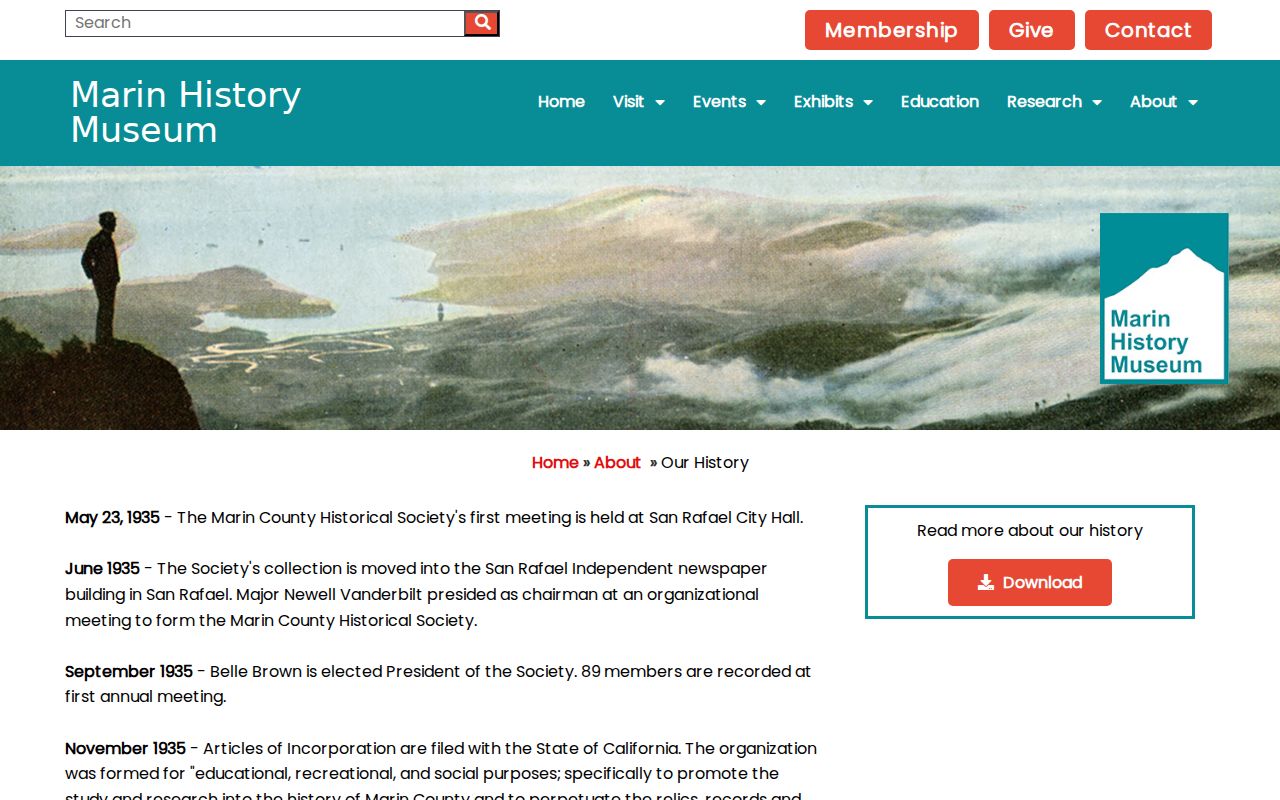
A preservation story is also a research instruction: confirm the current keeper and access method for every historic volume before drawing a conclusion from an online catalog or index.
Limits on Marin County Previous Residents
Previous residents research is strongest when it serves house history, family history, estate work, or a documented local-history question. It should not turn an old address into a claim about a living person. Deeds establish recorded land interests. Directories and census schedules provide dated household clues. Permits establish physical changes. Obituaries and probate establish later life events when public records permit access. Each source has a boundary.
Lawful use. Use previous-resident records for a lawful personal purpose and keep living people's details to the minimum needed. Do not use an old address trail to stalk, harass, intimidate, or harm anyone. Confirm uncertain records with the custodian that holds the original.
When the trail stops, record the exact stopping point: an unindexed year, an APN change, an unreadable map, a directory omission, or a protected file. A transparent gap is more useful than a guessed name.